I often get questions like, “How do I start creating embroidery from scratch?” “What if I have no inspiration?” or, “I’m bad at color matching, should I buy a course?”
Even now, these are questions I still face. I think it’s perfectly normal to have questions. They are what drive us to find answers, which in turn leads to creative expression.
But for many, one question after another leads to endless anxiety, causing them to forget the most important thing: action.
Whether you’re an experienced creator or a complete beginner, I believe the most crucial thing isn’t to have a life free of problems, but to have the courage to face and overcome them. It’s about fighting procrastination, self-doubt, and the obsession with perfection, and moving forward in that struggle.
This courage to press on, and the wisdom to turn that courage into effective action, is something I found a deep connection with in Austin Kleon‘s Steal Like an Artist. Many of the ideas in the book resonated with my own long-held beliefs. It was like a mirror, reflecting those lonely yet determined moments on my creative journey.
In this article, I’ve organized the author’s 10 tips into three main modules: Mindset, Action, and Positive Feedback. Simply put, it’s about first solving the “I want to, but I’m scared to” problem, then learning “how to do it,” and finally, gaining sustained motivation through “sharing and interaction.” This creates a simple framework for anyone to kickstart their creative journey.
I hope this guide can be the key that unlocks your creative potential.
(Note: The numbering of each tip follows the original book’s order for easy reference, but the content has been reorganized thematically, so the numbers are not sequential.)
Part 1: Mindset – Building the Right Creative Mentality
Creation is about expressing the ideas in your mind. If you start limiting yourself during the brainstorming phase, the final work will inevitably have “problems.” So, the first step is to address the root cause: clear out the “I can’t” and “I’m not brave enough” thoughts to pave the way for creativity.
1. Steal like an artist
The word “originality” hangs over many creators like a heavy burden. But the truth is, there is no such thing as pure originality. Every idea you think is new is just a remix or recombination of what has come before. Even David Bowie once said, “The only art I’ll ever study is stuff that I can steal from.” The Beatles’ music was heavily influenced by early rock ‘n’ roll artists like Chuck Berry and Elvis Presley.
My own embroidery style began by learning from several artists, including Yumiko Higuchi, Tracy, and Wakako Horai. I started by copying their work, then moved to semi-original pieces with partial modifications, and now I create my own original designs.
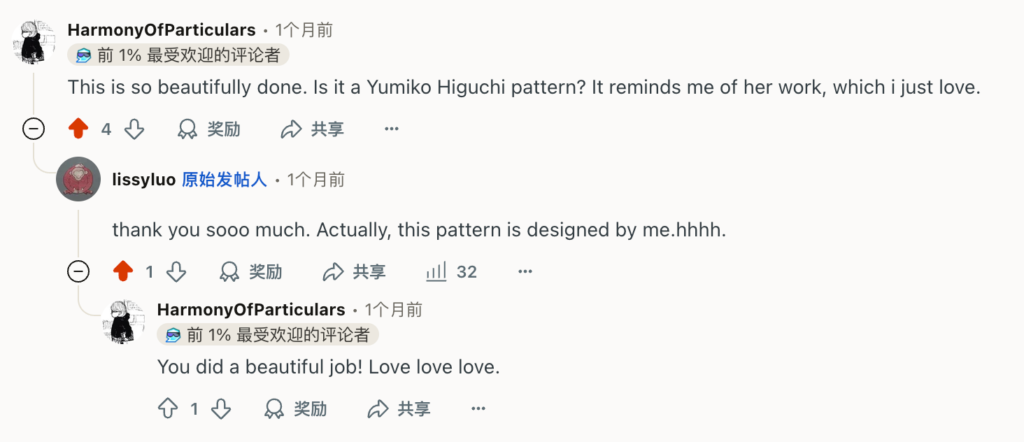
Even today, many people say my work resembles Yumiko Higuchi‘s, but I don’t worry about it. I know that imitation is a necessary path to becoming yourself. As time goes on, I will only become more “like myself.” Currently, I’m “stealing” from the Dunhuang murals and traditional Chinese patterns.
“There is nothing new under the sun.”
—Ecclesiastes 1:9
So, stop chasing the elusive ghost of “originality” and freely admit that we all stand on the shoulders of giants. Your job isn’t to create from nothing, but to find things worth “stealing” and then retell them in your own way. Like the great artists of history, go out and steal.
2. Don’t Wait Until You Know Who You Are to Get Started
A common trap for new creators is feeling they must first “find themselves” before they can begin. It’s as if we need a clear identity or a unique style to earn the right to create. But this waiting is often the greatest enemy of creation. The author calls it “Impostor Syndrome”—the feeling that you’re a fraud who’s about to be exposed.
You don’t define yourself by thinking; you become yourself by doing. You don’t have to wait for inspiration to strike or for the “perfect moment.” Through action, you’ll slowly eliminate what you don’t want, and what remains is what you do want. This collection of “wants” will form your style. But in the end, you’ll find that the quest to “become yourself” is a black hole; you’ll never truly know who you are or be able to define yourself with fixed labels. The labels you kept might be discarded in the future, and those you discarded might be picked up again. You are always on a journey, always eliminating, keeping, then eliminating and keeping again. You are fluid, constantly in motion.
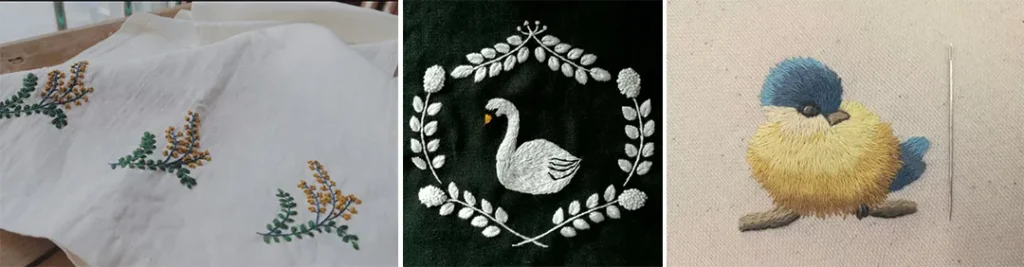
These are my early copies.
So, how do you take action? The answer is imitation.
Imitate how the masters think. At first, you might not know how to imitate their thinking, so start by copying their work. Carefully observe every line, every color. After enough copying, you will naturally begin to understand their thought process.
“Start copying what you love. Copy copy copy copy. At the end of the copy you will find your self.”
—Yohji Yamamoto
Forget the grand question of “Who am I?” Dive into action, and along the way, you will meet countless versions of “yourself.”
10. Creativity Is Subtraction
When my wardrobe is overflowing with clothes, I find it harder to decide what to wear. When I see my cabinet full of embroidery threads, I feel more stuck than inspired. It’s not a lack of ideas, but an overabundance of choices that paralyzes me.
“Telling yourself you have all the time in the world, all the money in the world, all the colors in the palette, anything you want—that just kills creativity.”
—Jack White
The secret to breaking free from this “creative paralysis” caused by choice overload is to embrace constraints. Limitations are not a cage for creativity; they are a catalyst. They free us from the infinite anxiety of “What should I do?” and focus our minds on a more concrete and interesting question: What can I create with what I have right now?
I moved from a 90 m² home in Chengdu to a 40 m² one in Shenzhen. I had to downsize everything by half, from my clothes to my creative materials, but my creativity didn’t suffer. I made a rule for myself: no buying new threads or fabric until I’ve used up what I already have. This spatial constraint forced me to think creatively about how to use my existing materials.
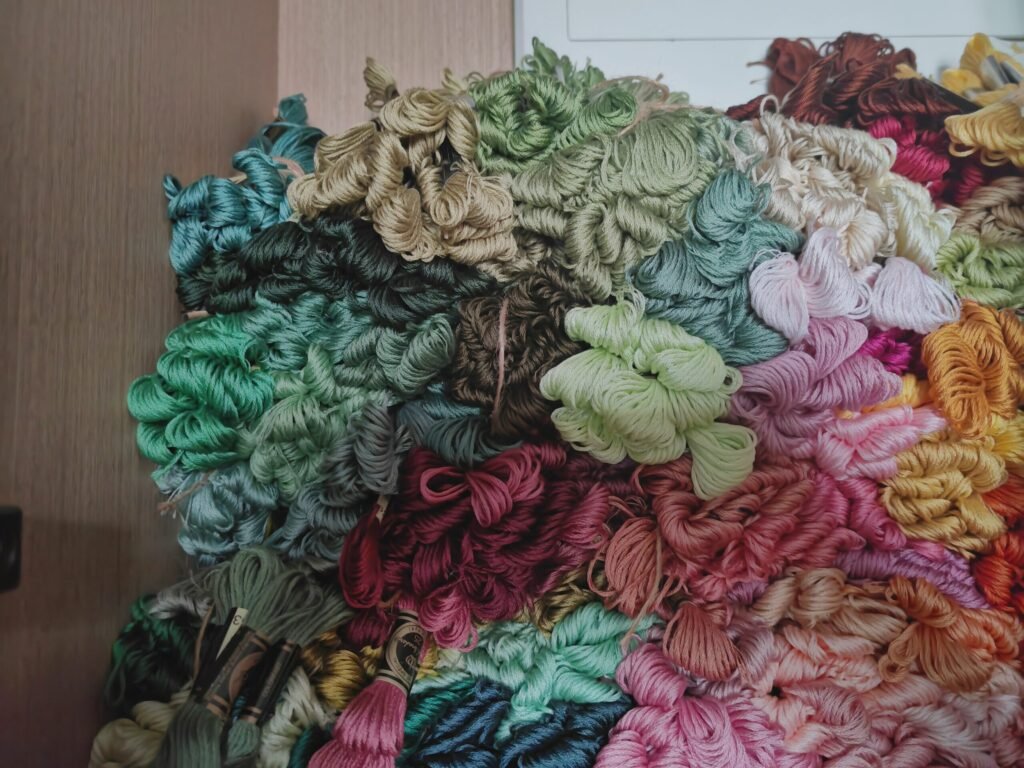
Embroidery thread I brought with me from Chengdu to Shenzhen.
Whether it’s a limitation of time, tools, or theme, constraints are not a prison for creativity—they are its greatest stimulant.
Part 2: Action – Building Effective Creative Habits
Once we stop getting bogged down by “originality” and “who am I” and understand the power of constraints, the door to creation swings open. However, a change in mindset is just the first step. What truly brings work to life is daily practice. Let’s look at the specific, actionable advice the author offers to help us build effective creative habits.
3. Write the Book You Want to Read
Have you ever searched online for a specific style of art, only to find nothing? Or wanted to learn a particular stitch, but couldn’t find a detailed tutorial anywhere?
When this happens, we often feel disappointed and give up or settle for less. But Austin Kleon tells us that this is the perfect moment for creation. If you want to see something that doesn’t exist yet, create it yourself.
I remember when I first started posting on RedNote (a Chinese social media platform similar to Instagram and Pinterest). I noticed that beginner embroidery tutorials on the platform were either unclear or lacked aesthetic appeal. So I thought, “Why don’t I create a series of beginner tutorials that match my own aesthetic?” This simple idea became a huge source of motivation for me to keep creating. I’ve been doing it for years now and have gained a wonderful following.
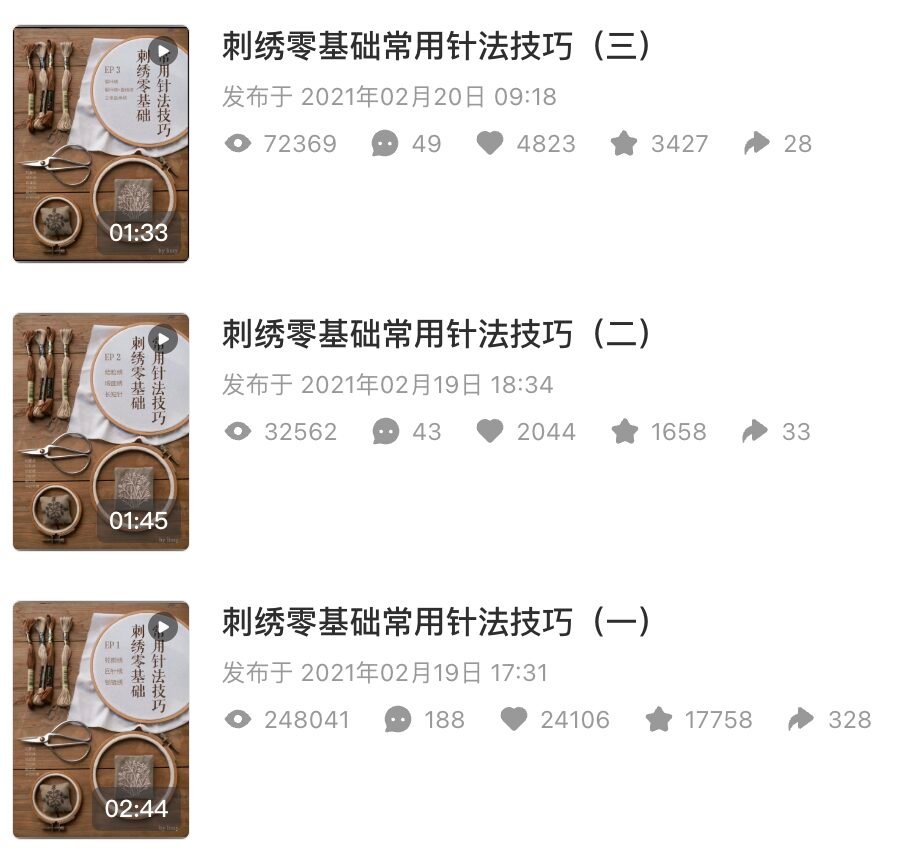
The stats from my posts on RedNote, where I now have 47,000 followers.
This advice might seem daunting to many, but a lot of great work truly begins as a passion project—something you do just for yourself.
4. Use Your Hands
In the digital age, we’re used to everything happening on a screen—thinking, designing, communicating. But Austin Kleon reminds us that the spark of creativity often ignites through physical touch. He says the computer is a tool for editing and publishing finished work, not the best place for ideas to be born.
“We don’t know where we get our ideas from. What we do know is that we do not get them from our laptops.”
—John Cleese
To put this into practice, the author suggests setting up two separate workspaces: an “Analog” space and a “Digital” space.
In the analog workspace, ban all electronic devices. This is your creative “playground,” filled only with paper, pens, sticky notes, and scissors. Here, you can doodle, make mistakes, and create a “mess,” allowing ideas to flow freely in an unconstrained physical space. The digital workspace is reserved for processing ideas that have already taken shape. Here, you use your computer, tablet, and other tools to edit, refine, and publish.
This philosophy aligns perfectly with my work habits. Whether I’m doing graphic design or sketching an embroidery pattern, my first step is never to open my computer. I start by doodling on paper, writing and drawing freely. Only when an idea begins to crystallize do I move to the computer to formalize and refine it with software. For me, the computer is a tool to realize ideas, not to generate them. If I start by staring at a blank screen, all I see is “blankness,” and that’s all I can produce.
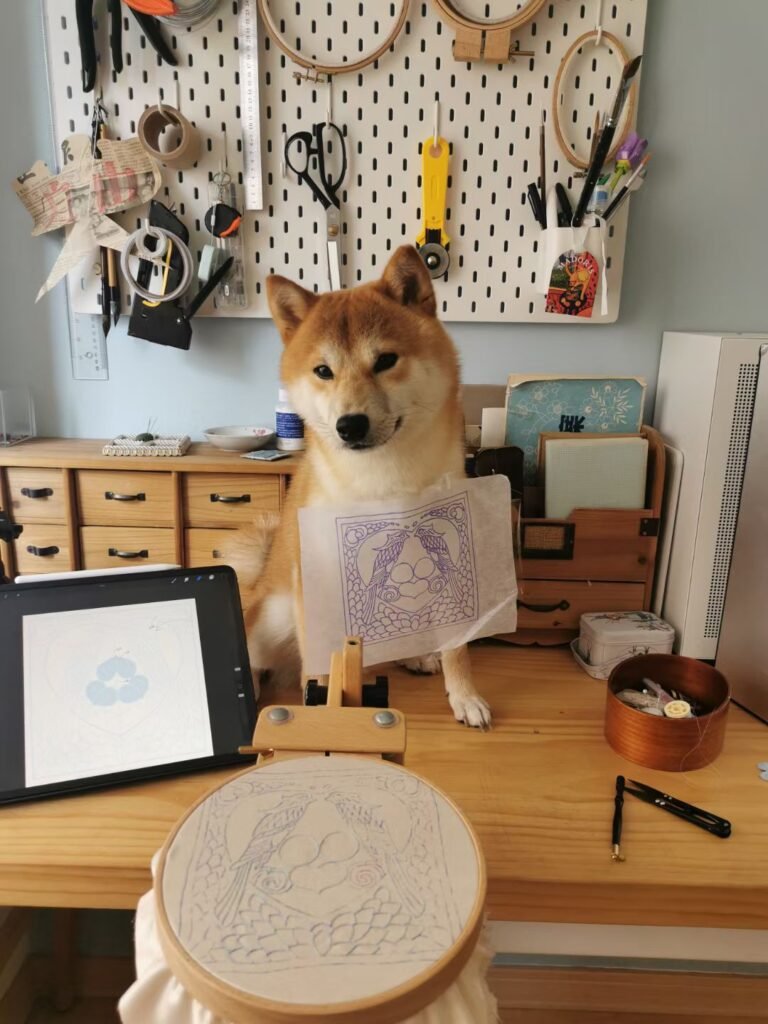
This is my home studio in Chengdu.
I’ve also experimented with using AI for creation, but I find that while it’s efficient, it lacks a certain spark. The monotonous process of “conversing” with a machine by constantly adjusting prompts feels a bit restrictive. I enjoy the surprise of ink bleeding on paper, the unique and irreversible texture left by a crayon. I enjoy the process of using these tools, not just the pursuit of a perfect final result.
Computers and AI offer unprecedented efficiency, but the root of inspiration will always be your genuine experience of life and your direct interaction with the world. So, if you feel creatively stuck, step away from the screen. Buy a box of crayons and draw freely on paper like a child, without worrying about perfect lines or color combinations.
Just get your hands dirty.
5. Side Projects and Hobbies Are Important.
We often draw a sharp line between our hobbies and our work, thinking of hobbies as “unproductive” or a waste of time. But Austin Kleon argues that these seemingly unrelated side projects and hobbies are, in fact, your most important sources of creativity.
He even introduces a counterintuitive concept: “Practice Productive Procrastination.” In simple terms, he suggests having several projects going at once. When you get bored or stuck on one, switch to another. This shift allows your brain to “rest” from one task, and when you return to it, you often bring a fresh perspective and new inspiration. Procrastination is seen as a bad thing by most, but from another angle, it can actually be a form of “efficiency.”
To be honest, I used to be afraid of this “jumping around” approach. It gave me anxiety about not finishing things. I felt I had to read a book from start to finish, or complete one embroidery piece before starting the next. I don’t know about others, but for me, even doing what I love most can become tedious and even annoying if repeated day after day. Human nature is full of contradictions: we crave the sense of control that routine brings, yet we also long for surprises to break the monotony. Finding a balance between these two in creation might be the key to sustained output.
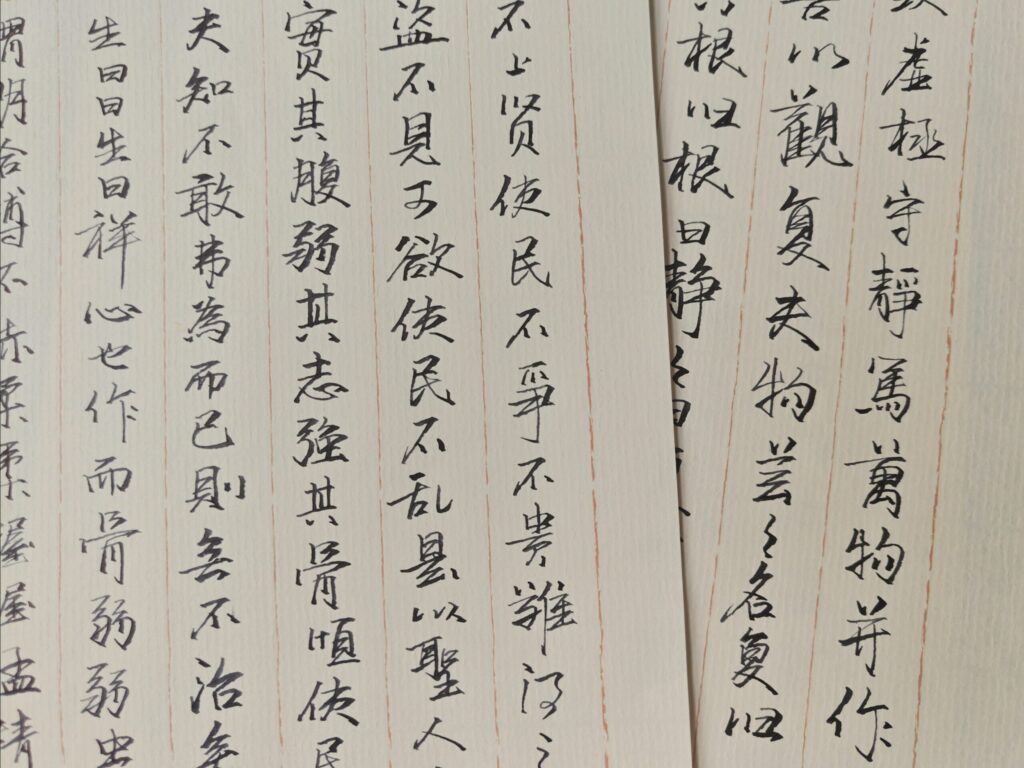
My calligraphy
Now, when I feel “off” while embroidering, I allow myself to stop. I might practice calligraphy or go for a hike, letting my mind wander aimlessly. I’ve gradually discovered that these aimless side projects nourish my creativity in unexpected ways. For example, the wrist control I practice in calligraphy affects the force I use with my needle, which in turn influences the final look of my embroidery.
“You can’t connect the dots looking forward; you can only connect them looking backwards.”
—Steve Jobs
Stop feeling guilty about your “unproductive” hobbies. Whether it’s playing the guitar, woodworking, or studying chemistry, dive into them wholeheartedly. Don’t worry about whether they’re “useful” or rush to see the connections between them. They might come in handy in the future, but even if they don’t, so what? They are all essential parts of what makes you “you.”
9. Be Boring. (It’s the Only Way to Get Work Done.)
The previous tip mentioned finding a balance between routine and surprise in creation. This next tip is about the “routine” foundation that supports all those surprises.
The “boring” the author refers to isn’t about being a dull person. It’s about advocating for a regular, stable, and predictable rhythm of life. This means:
- Establishing a fixed work schedule, instead of waiting for inspiration to strike.
- Taking care of your body by getting enough sleep and eating well.
- Managing your finances wisely to avoid the “starving artist” cliché.
Creation itself is an adventure full of uncertainty and chaos. If your life is equally turbulent, your energy will be doubly drained, leaving you exhausted. Conversely, a “boring,” routine life acts as a stable home base, providing a steady supply of support and shelter for your creative heart, which is always ready for an expedition into the wild.
There was a time when I was unemployed. Logically, with more time to create, I should have been more inspired. But the reality was, I became extremely anxious. Besides the lack of income, the irregular sleep schedule was even harder on me. Ironically, my creative state was best when I was working a regular job. Even if I got home at 10:30 PM, I would be full of energy and stitch for half an hour.
Of course, I’m not promoting grind culture or telling everyone to get a corporate job. I just want to express that a routine, “boring” life is essential. You need sudden surprises, but you also need profoundly boring regularity.
Part 3: Connect with the World – Building a Positive Feedback Loop
With a solid foundation of mindset and action, we have the ability to produce work consistently. But the creative journey doesn’t end there. True growth comes from releasing our work into the world’s great echo chamber, gathering feedback, and building a positive cycle that nourishes us to keep going.
6. The Secret: Do Good Work and Share It with People.
We often believe that “good wine needs no bush”—that if our work is good enough, it will eventually be discovered. But in the internet age, waiting to be discovered is the last thing you should do. What you need to do is two things:
- Do good work.
- Share it with people.
The first step is fundamental. It’s about honing your craft through daily practice, thought, and refinement. There are no shortcuts. But many people get stuck on the second step. We tell ourselves, “I’ll share it when I’m ready,” afraid that our imperfect work will be ridiculed.
But the purpose of sharing is far more than just showing off a perfect result. Sharing is part of the creative process itself. You can share a sketch, a work-in-progress, or even just an idea that excites you. One of the great advantages of the internet is that it’s full of “sparks of ideas” waiting for you to collide with them.
I know this from experience. I posted a piece I was very proud of on Reddit. The name of the work was “事事如意” (Shì Shì Rú Yì), a traditional Chinese blessing meaning “May all go as you wish,” which often features persimmons. However, a user from another country commented that they thought I had embroidered a sperm. This wonderful cross-cultural misunderstanding was both hilarious and enlightening. It showed me the magic of sharing. You never know what ripples your work will create in the eyes of others, and this unexpected feedback is, in itself, priceless inspiration.
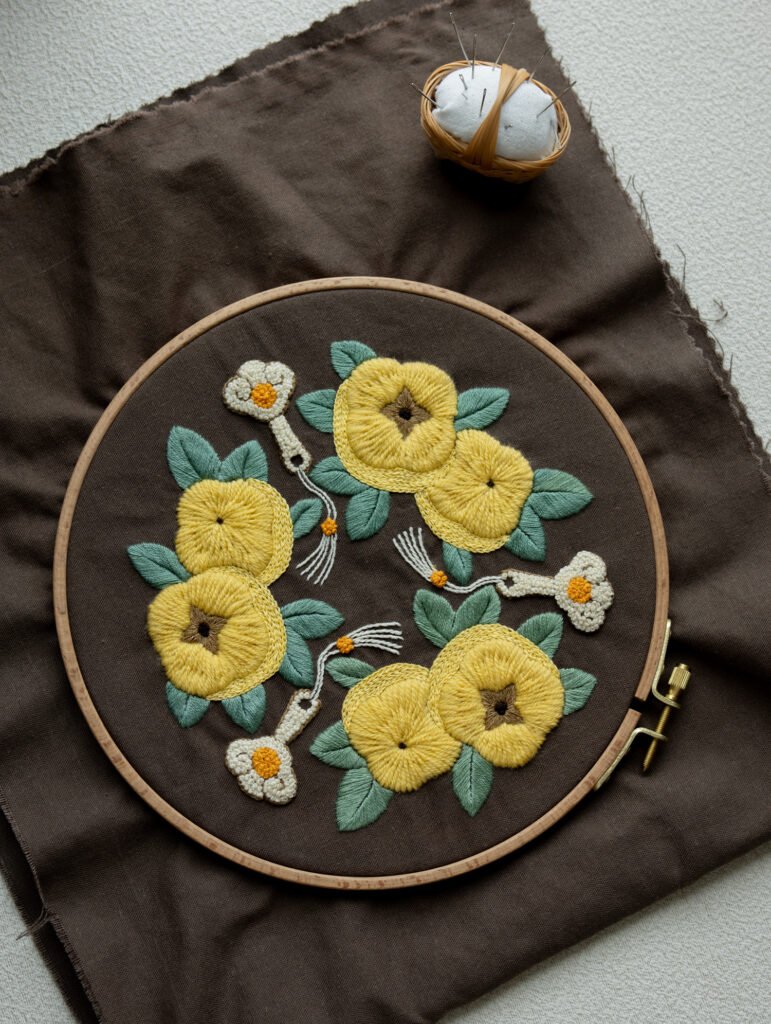
The art piece “事事如意” (Shì Shì Rú Yì)/made by lissyluo
So, go ahead and share your story. What you gain will be far more than what you fear.
7. Geography Is No Longer Our Master.
In the past, creators flocked to “centers of the universe” like Paris, New York, or London, as if only by being there could they find creative nourishment and community. But in the internet age, geography is no longer a limitation.
Whether you’re in a bustling city or a remote town, you can connect with the most interesting souls in the world through the internet, find your tribe, and build your own “online salon.” From this perspective, physical location seems less important.
But then the author presents a seemingly contradictory idea: you must actively leave the comfort of your home. Our brains have an “energy-saving” laziness. When everything around us is familiar, they stop thinking deeply. But travel—even just a trip to a park you’ve never visited—can make the world look new. And when the world looks new, our brains are forced to “reboot” and start working harder.
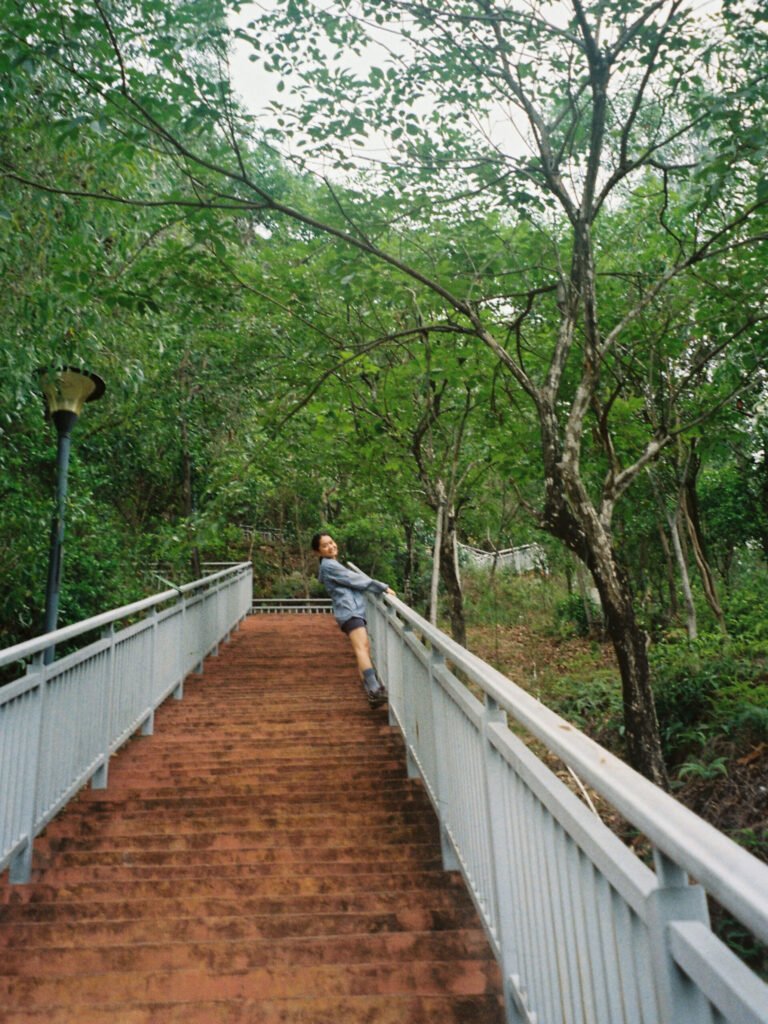
Local park in ShenZhen
This is exactly why I love hiking. Even on a mountain I’ve climbed many times, each visit is different—the light, the plants, the insects I encounter. Every brief “escape” from my screen and familiar workspace injects fresh air into my brain, allowing stuck thoughts to flow again.
While the internet has broken down spatial barriers, we must also step out of the convenience it provides and embrace the “inconvenience” of the real world. A creator’s vitality comes from both the infinite connections of the online world and the tangible touch of the offline one.
8. Be Nice. (The World Is a Small Town.)
Creation is a solitary act, but creators do not live in a vacuum. The author offers a crucial social rule for the internet age: Be nice.
Arguing with people and attacking others online is the most draining and meaningless activity. The author suggests we channel our anger into creative fuel. If you see a design that makes you angry, don’t get into an online debate. Instead, go make something better.
The core of this advice is about how to manage our relationships with others and how to handle external feedback:
- Surround yourself with talented people: If you’re the smartest person in the room, you need to find a new room. Follow people who are smarter and more talented than you, and learn from them.
- Praise your heroes publicly: If you admire a creator, write a blog post or record a video analyzing what makes their work great. Don’t expect a response; the process itself will benefit you immensely.
- Ignore the haters: Your time and energy are limited. Don’t waste them arguing with people who will never get it. Your job is to find your friends, not to convert your enemies.
Finally, the author gives a highly practical tip to help us combat the negative emotions on our creative journey: keep a “Praise File.”
Save all the kind comments, thank-you emails from clients, and encouraging messages from readers. When you’re drowning in self-doubt or feeling discouraged, open it up and read through it. It will act as an energy station, reminding you that your work has been valued and giving you the courage to keep going.
Remember, creation is for expression and connection, not for combat.
Final Thoughts
For all the questions that plague countless creators—the anxieties about inspiration, originality, and action—this book’s answer is not some profound theory. It’s a simple, direct instruction: just go and “steal.” After reading this book, you’ll realize that all great artists have been troubled by similar questions. The secret to their success wasn’t creating out of thin air, but actively imitating and recreating, drawing nourishment from the giants who came before, building energy through routine, and bravely sharing their work with the world to create impact and connection.

These 10 tips are less a set of creative secrets and more an invitation to a way of life. They invite us to let go of our obsession with perfection and embrace the uncertainty of the process; to find ourselves through imitation, to build energy in “boredom,” and to find joy in sharing.
The creative path may still be lonely at times, but I hope this article can serve as a small spark to light your way forward whenever you feel lost or doubtful.
“So, what should I do next?”
Take a walk.
Tidy up your desk.
Look out the window at the night sky.
Copy a piece of work you admire.
Share what you’re thinking about with a friend.
Turn off your phone and take a short nap.