
My husband and I hiking in the snowy mountains of Western Sichuan
“It’s the response from others that makes you mistakenly believe something is your passion. It’s not passion that brought you to where you are today and led to your success.”
I recently read a chapter from Scott Adams’ How to Fail at Almost Everything and Still Win Big titled “Passion Is Bullshit,” and it struck a deep chord with me. This is because my own mental model had the exact “problem” he described, which I summarized in the opening quote. Most people habitually think it’s “passion” that allows us to go further, be more creative, and live more interesting lives. But they never consider that it’s achieving certain results (which we call success) that actually gives birth to “passion.” What keeps us going might just be the day-to-day grind, not some intoxicating “passion.”
Success caused passion more than passion caused success.
The Anatomy of the Passion Trap
I started running a RedNote account in 2022, and after one of my posts went viral, I thought I had finally found my passion. I wanted to turn it into a career; I even considered quitting my job to start a business. Passion is truly intoxicating. At that moment, I felt that even if I worked from morning till night, I would never complain. No clients, no boss, just doing what I “loved” every day—the thought alone was exciting.
In the days that followed, I immersed myself in managing the account and began listing products for sale. I was full of confidence, thinking everything would play out exactly according to my script. The positive feedback from the data gave me a continuous taste of success. Before the products were even listed, I started designing packaging and embroidery patterns, buying materials in bulk, portioning and packing them, and even thoughtfully included a “handmade card” with every package. I looked forward to huge sales, and I anticipated the feeling of being touched people would have upon receiving my handmade cards. But in the end, I was the only one moved by my efforts.

The Christmas decorative wall hanging for which only 2 DIY kits were sold.
So why do we fall into the “passion trap” so easily?
People are inherently “lazy.” Few people enjoy tackling difficult challenges; we all prefer to stay in our comfort zones, doing things we’re good at. But being good at something doesn’t mean you’re passionate about it. And if, on top of that, you unexpectedly receive external validation, it makes you even more certain that it was your passion that led to your success and brought you to this point.
Passion is just a byproduct of your success; it doesn’t play the leading role. The factors for success are many and can’t be pinned down to a single point. Besides, everyone defines success differently, so I won’t delve into how to become successful here, as it’s beyond the scope of this discussion.
If you’re interested in the topic of achieving success, you can read the book. The author summarizes many personal methods that might give you some inspiration. I haven’t finished it yet, so I don’t know what methods the author will provide to lead you to success.

The post that went viral on RedNote
Beyond the Trap: Passion as a Tool
I’m not sure how to succeed, but I do have some thoughts about life that might offer you a little inspiration.
In my view, passion isn’t a bad thing; it all depends on how you use it to “regulate” yourself. “Emotion makes you act. Logic makes you think.” If you enter a field with no experience, as if guided by some unseen force, and manage to achieve great results, that’s incredibly lucky. To be able to operate so skillfully without knowing if you could even do it, and to be fortunate enough to get positive feedback—passion certainly played a part. However, as things progress, you need to add some rational thinking to ensure continued progress.
The success that others see (which can be understood here as achieving something most people want) is actually a very tedious process, with no special techniques involved. What sustains me through doing these boring things day after day isn’t passion, nor is it logic, but my understanding of how to “harmonize” them. I need passion, and I also need reason. I can’t bring myself to do embroidery for 8 hours a day, but I also can’t go 8 days without doing it at all. Those past “failed” experiences were just that—experiences. They taught me that passion alone isn’t enough; knowing how to adjust your mindset is what truly matters.
I’ve been practicing calligraphy for over half a year now. When I’m in a good mood, I write a whole piece. When I’m in a bad mood, I just write a single character. After finishing a piece, I take a photo of it with my phone. After a while, I’ll compare the before and after to see which characters are still not well-written and how I can improve. When I find that I’ve mastered a certain character, I start experimenting and try writing it in a different style.
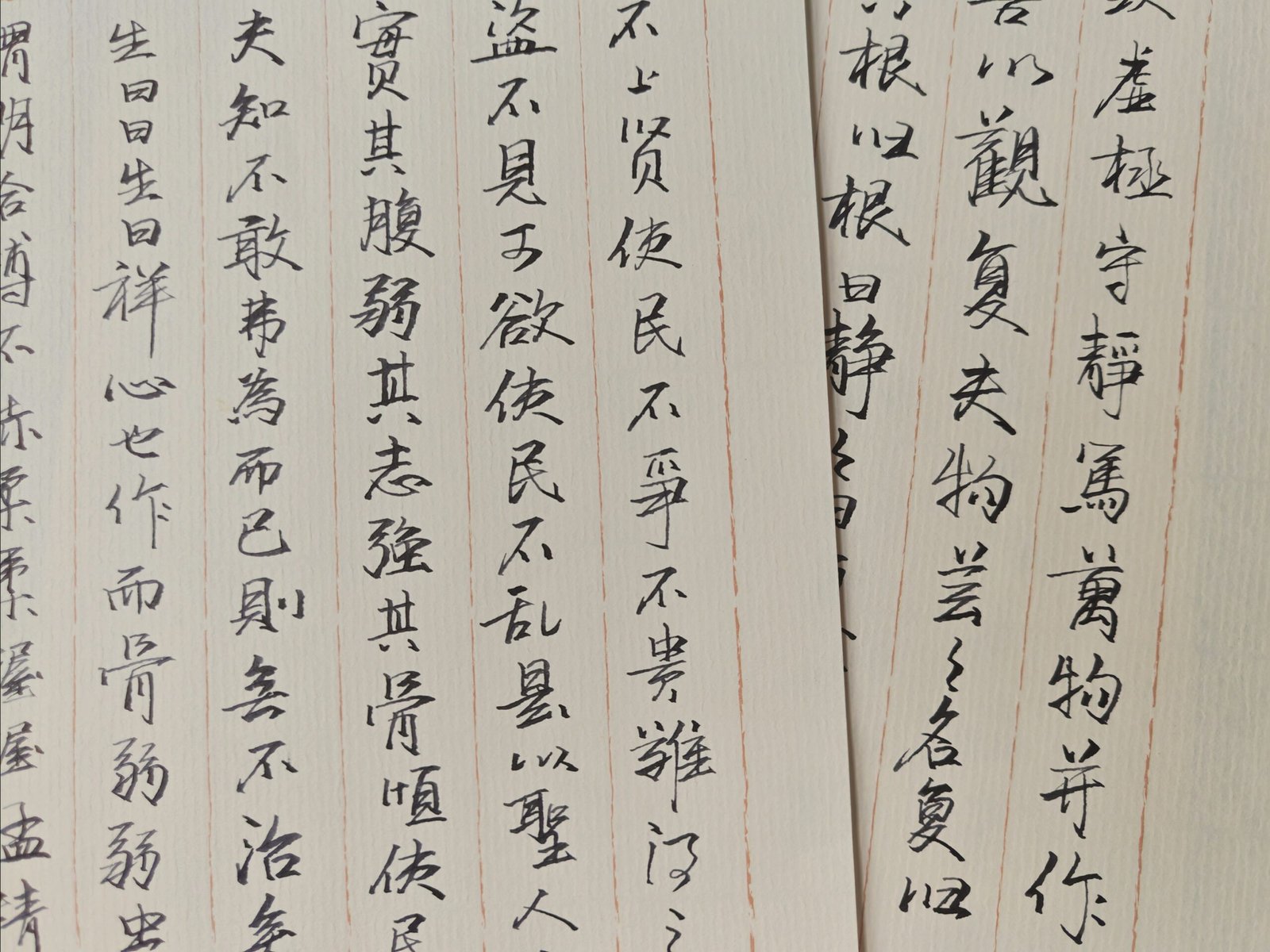
My calligraphy
Whatever you do, just treat it as an “experience.” There’s no success or failure, no right or wrong. Every time is the first time. Whether it’s passion or reason, they are just tools.
As for how to truly treat everything as an “experience”—that’s something words can’t fully explain. Everyone’s life experience is different, and you’ll only understand it once you’ve lived it yourself.