This isn’t an article about stitches or color theory. It’s about the thinking behind the art.
I believe that technique is ultimately just a tool for expression. What truly moves us in a piece of art is the thought and emotion woven into it. So, more than mastering a craft, I’m preoccupied with other questions: How do I find what I want to say? Where does inspiration really come from? And how do I transform those vague, fleeting feelings into a finished piece?
If you’ve ever felt stuck, wondering, “What should I even create?” perhaps my reflections can offer a little light.
(For a glimpse into the world I create with needle and thread, you can explore my work [here].)
Let the World Be Your Muse
Inspiration doesn’t appear out of thin air. It hides in the landscapes we’ve seen, the words we’ve read, and the art we’ve admired. I have two main ways of “collecting” it: one is by training my senses, and the other is by actively learning from others.
1. Live in the Moment, Through All Your Senses
The first step in creation isn’t to pick up a needle and thread; it’s to learn how to feel.
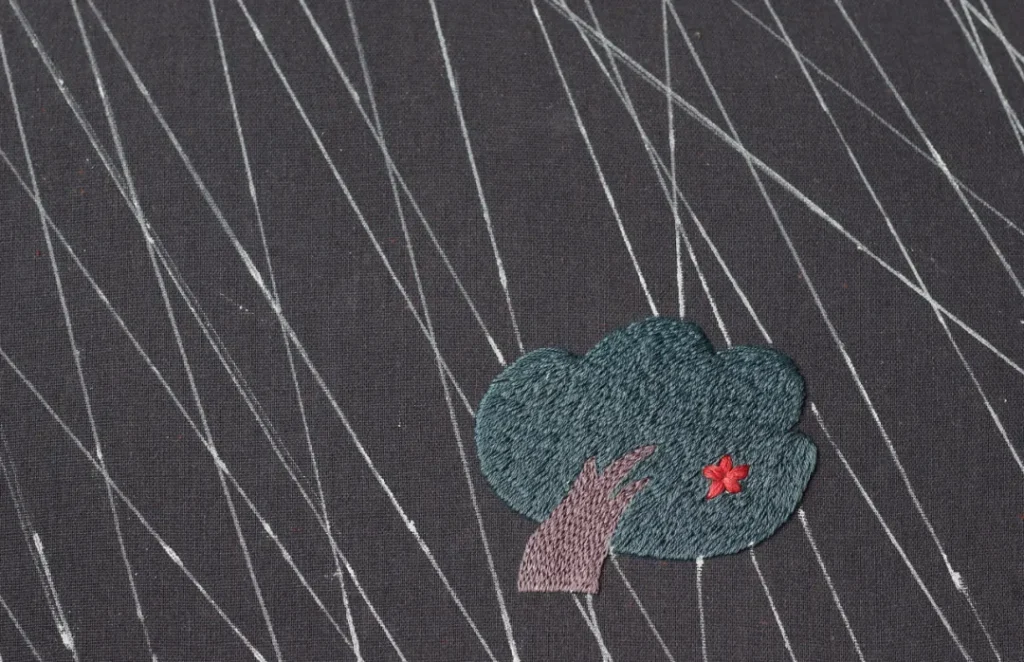
Shelter from the Rain, 2025. LissyLuo .
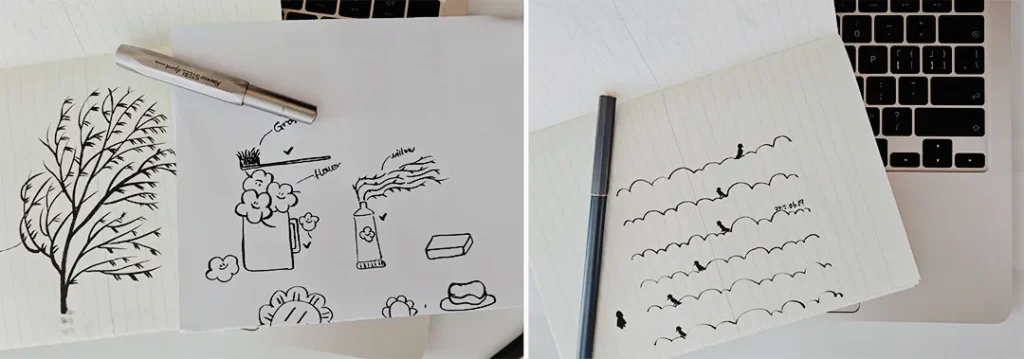
Inspirations, quickly sketched on paper.
True inspiration comes not just from the images our eyes see, but from our entire body’s perception of the world. It’s the sudden mountain shower you get caught in, hearing the trees howl and weep in the downpour. It’s not just found in nature, but in the quiet details of daily life, too—the soap bubbles that froth up as you wash your clothes, the tiny bird you encounter on a dog walk, flapping with all its might.
If you are willing to immerse yourself in your surroundings, to be truly present, every small, seemingly insignificant moment can become the raw material for your art.
Here’s something you might find a bit strange. I’m nearsighted, but outside of work, I rarely wear my glasses. I don’t enjoy seeing the world in perfect focus; a world saturated with detail can feel oppressive to me. I prefer the soft contours, the blurred edges, the “almost-but-not-quite” state of things. It leaves room for my imagination to wander. Of course, this has also earned me a reputation for being a bit aloof.
Beyond the present moment, I also draw inspiration from the vast, abstract emotions that flow from the pages of books.
Books provide a kind of “imagined feeling.” It’s less direct than seeing something with your own eyes, but it often leaves a deeper echo in the mind. When I read the line, “The earth is a mote of dust in a sunbeam” in Brian Greene’s Until the End of Time, I was struck by the smallness of humanity and the randomness of fate. A sense of fear washed over me, which eventually softened into a profound gratitude for the simple fact of being alive. You feel life’s fragility and its magnificence all at once.
This complex emotion has slowly seeped into my work. You’ll notice that within my seemingly orderly compositions, there are always a few “unruly” details:
- Among a neat row of monkeys, a single peach has secretly joined the lineup.
- As the wind rustles the willows, one bird flies resolutely against it.
- Of four hens standing side by side, one is always defiantly unique.
These details don’t disrupt the overall harmony. They are quiet acts of defiance, a questioning of fate within a world of order.
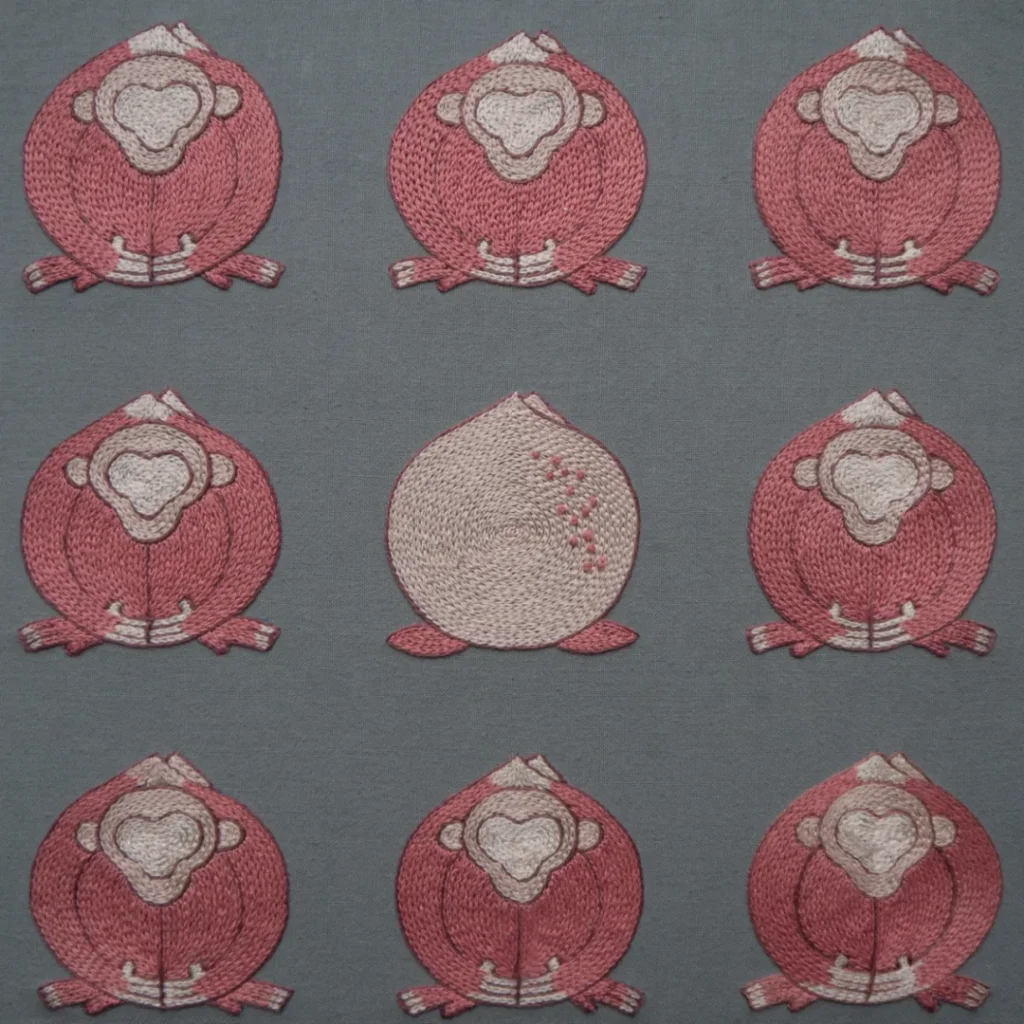
Embracing Loneliness, 2020. LissyLuo.
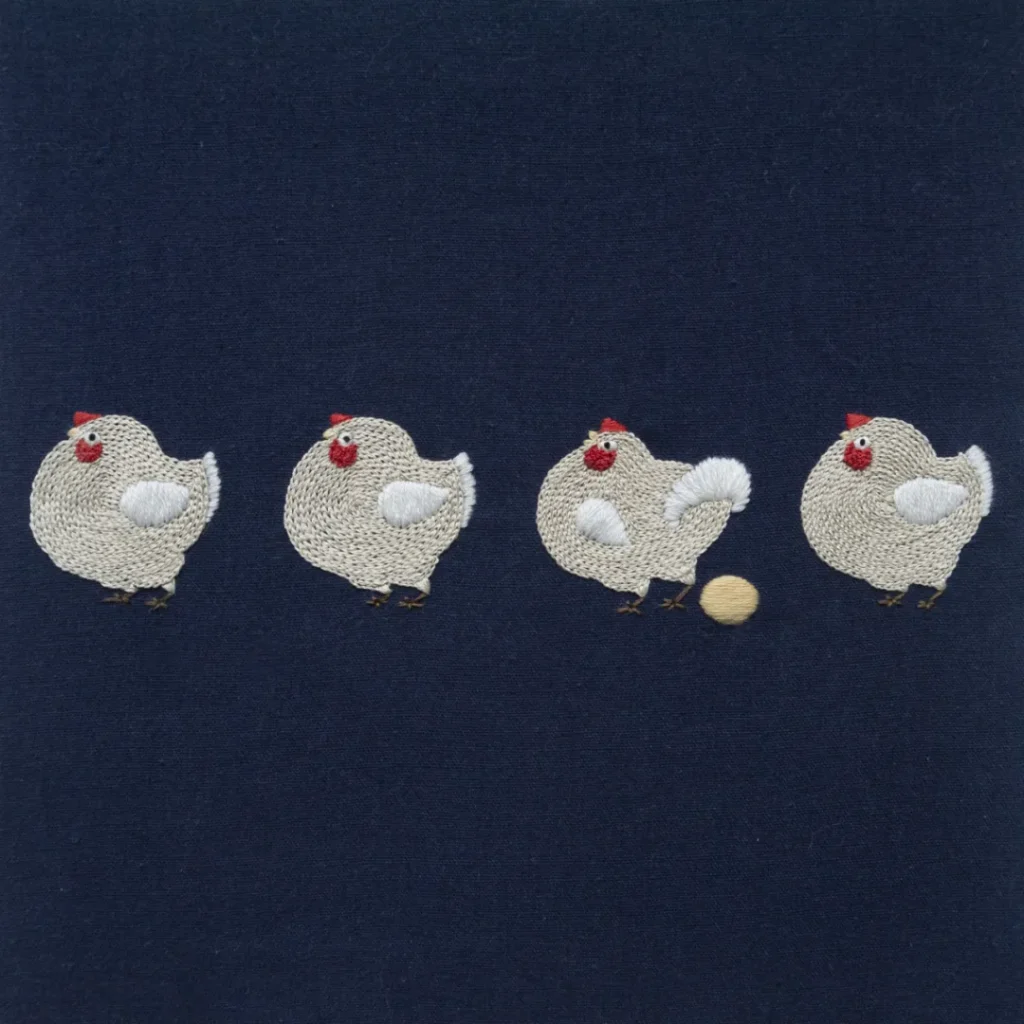
The Maverick Hen, 2020. LissyLuo.
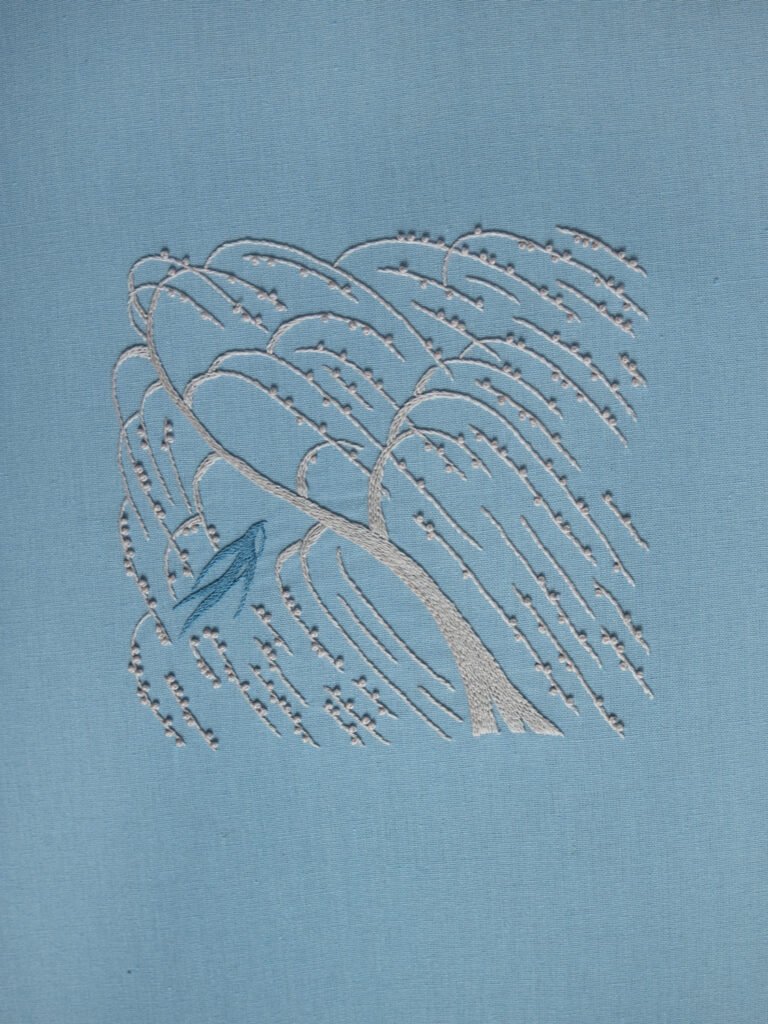
Willows in the Wind, 2025. LissyLuo
A truly moving piece of art is never just a showcase of technique. It’s a vessel for a genuine experience. We fall in love with a work because it says something we’ve always felt but could never find the words for.
We are always searching for inspiration, but we forget: true creation begins when we slow down and truly start to feel our lives.
2. Finding Yourself in the Art of Others
Besides collecting sensory experiences, I know that to truly grow, I need to “borrow strength” from those who came before me. Imitating the work of great artists is one of the fastest ways to develop your own skills.
But in reality, many people shy away from imitation. In their pursuit of pure originality, they fall into a creative slump.
In our internet age, attention is the scarcest resource. We’re conditioned to chase what’s “viral,” what will “break out,” what is “different.” We rush to build a personal brand, sometimes manufacturing conflict just to be unique, and we forget to look back at the classics that have stood the test of time.
At the same time, the online environment’s zero-tolerance policy on “plagiarism” has become a psychological burden for many creators. Especially for someone like me, who favors a minimalist style, I often worry that my work might be misunderstood. The zero-tolerance attitude itself isn’t wrong—it protects original creators—but it can also make us timid and hesitant in the early stages of our journey.
But imitation isn’t about mindless, mechanical repetition. It’s a conscious act of understanding and re-creation.
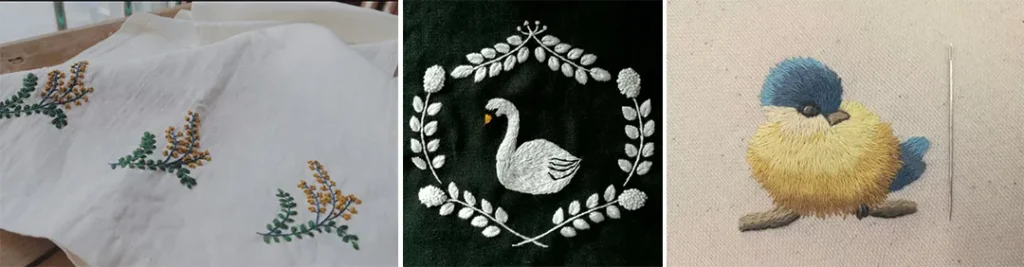
Early studies after Trish Burr and Yumiko Higuchi
When I was studying the work of Yumiko Higuchi, for example, I didn’t just copy her stitches. I tried to understand the rhythm of each thread, the logic behind every choice. Why did she make this motif this size and not larger? Why use satin stitch here instead of French knots? What is the visual difference? The original artist may not have consciously considered every single detail, but as you analyze and imitate, you begin to grasp their unique artistic DNA. And eventually, those elements become part of your own.
Sometimes, this analysis doesn’t yield an immediate, rational conclusion. But the process of analysis itself makes the outcome inevitable—you will always gain something that is uniquely yours.
And just as I don’t limit my inspiration to existing patterns, your imitation shouldn’t be confined to your own field. Sculpture, painting, film, calligraphy—all of these can be your teachers. This “imitation” doesn’t always mean physically recreating the work. It can be an act of analyzing, feeling, and understanding their expressive methods through writing. Looking across different media can jolt you out of a fixed perspective and reveal new possibilities.
In truth, “innovation” and “personal style” don’t exist from the very beginning. They emerge slowly, through countless acts of observation, learning, and imitation.
It reminds me of what Heidegger and Sartre said: the “self” is not innate but is constructed through our interactions with the world. We aren’t born with a clear identity; we only discover who we are and who we want to become through cycles of imitation and reflection.
The work of others becomes a mirror. It shows you different ways of being, and in that reflection, you see yourself more clearly.
Imitating others won’t make you become them. It will only help you become a better version of yourself.
The Alchemy of Incubation
Once inspiration has been gathered and experience has been absorbed, the next step is to let it all collide freely in your mind.
There are no rules in this phase, and not much rational intervention is needed. I take all the fragments I’ve collected—the notes, the sketches from other artists, the lines from books, the daily observations—and throw them all together. I let them spark, intersect, and reassemble on their own. It’s like an improvisational performance of thought. You never know what image or idea will emerge next, but this very uncertainty is what lies at the heart of creation.
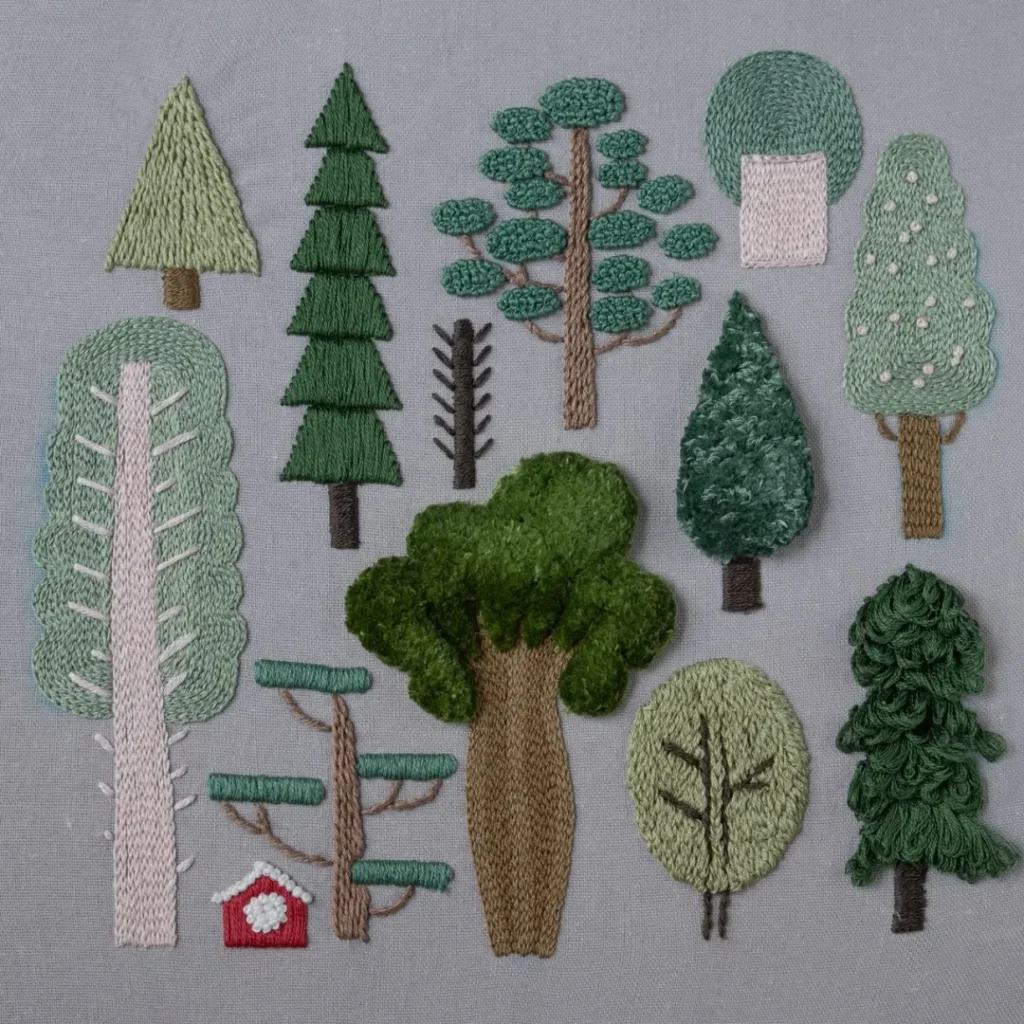
In this process, I don’t rush to judge whether an idea is “good” or “useful.” I give myself permission to try everything. Even if it seems completely unrelated, even if it might be discarded in the end—the important thing is that I am in motion.
Because I know this: creation is not a finished product. It is an action, happening right now.
You will hear voices: “Is this too abstract?” “Will people get it?” “Is it marketable?” I choose to mute these voices and listen only to the most honest one inside me. Don’t worry so much about whether it will be liked. The point of creating is to express what you need to say.
You’ll find that seemingly unrelated materials will, in a sudden moment, connect. And that is the moment creation truly begins.
Let Your Work Breathe
After a round of experimenting and rearranging, I choose to stop. I give the work—and myself—time to take a deep breath.
This interval might be a few days, or it might be as long as a year. I don’t rush the process or force an immediate answer. Instead, I return to the beginning: I go back to feeling, observing, and living. During this time, the unfinished ideas quietly settle. Sometimes, in an unguarded moment, they suddenly become clear.
It’s a strange and wonderful state to be in: one part of my mind is still connected to the unfinished piece, while the other is fully living in the present. This tension reminds me that creation isn’t a straight line, but a cycle. There must be white space between input and output, and a balance between thought and intuition.
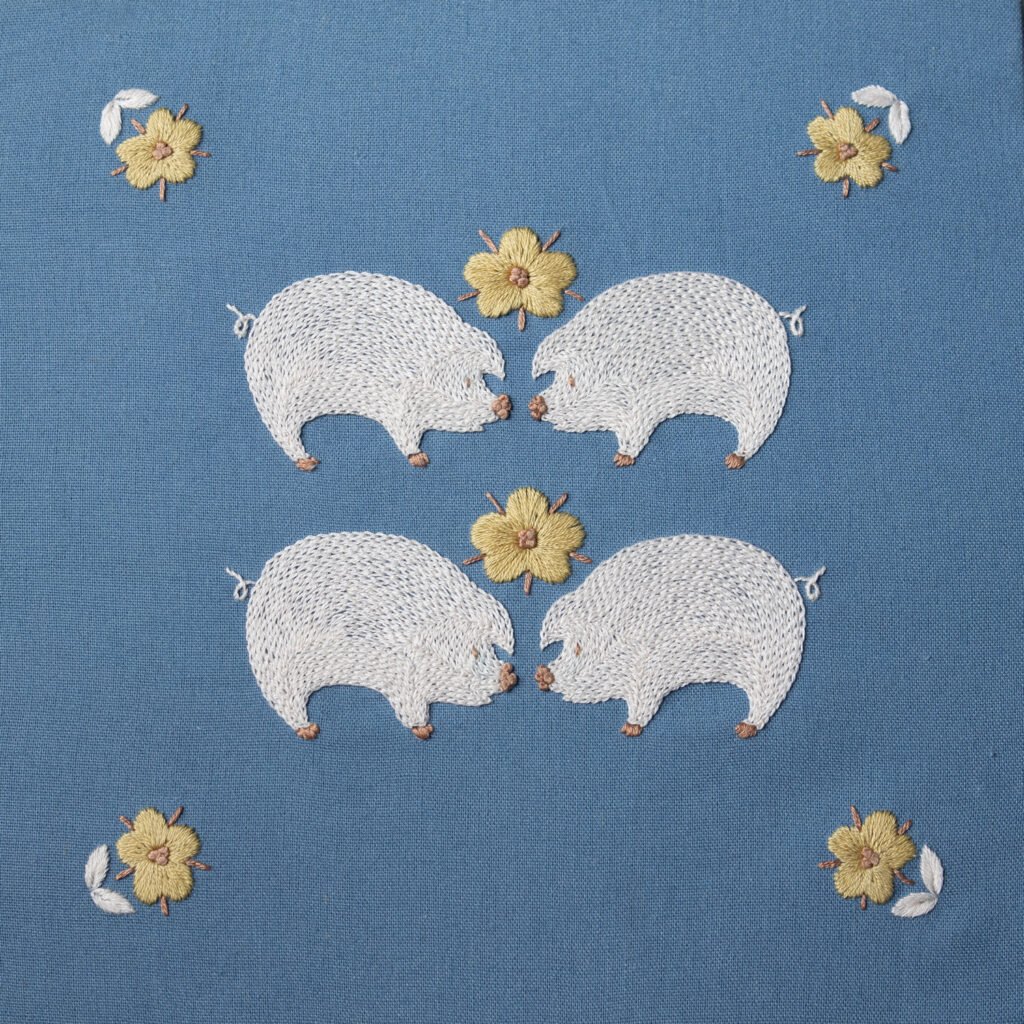
Piglet and Huahua(Flower),2024, LissyLuo
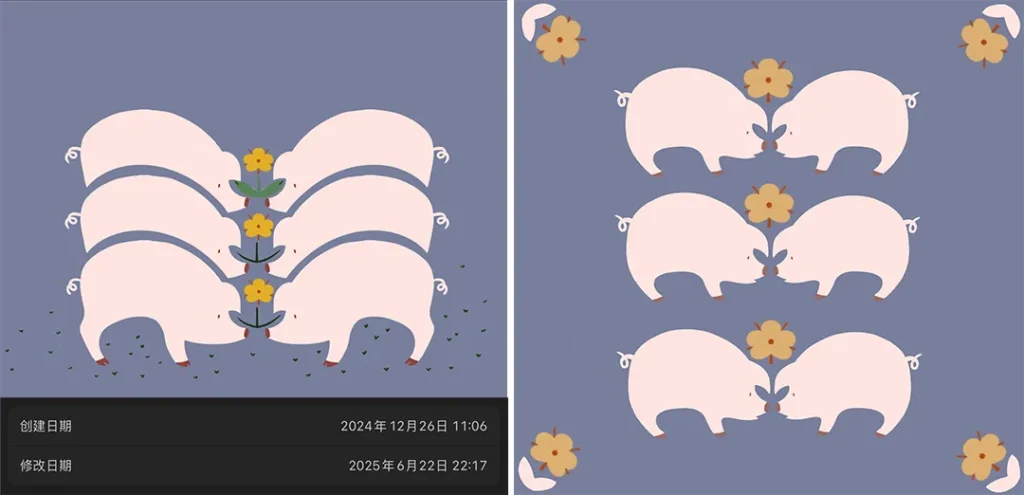
The journey of Piglet and Huahua(Flower)
designed in 2024 and brought to life with thread in 2025.
I think what truly brings me happiness and fulfillment isn’t finishing a piece, but the state of constantly entering and gracefully stepping away from the creative process. It’s this rhythm of moving between my art and my life, allowing unfinished ideas to settle and ferment before returning to the canvas to continue the conversation, that makes me feel grounded and free.
So, don’t be in a hurry to finish it all at once.
Sometimes, the best way to move forward is to pause.
“No One Can Teach You How to Paint”
The whole life, already framed, right there.
— Maudie (2016)
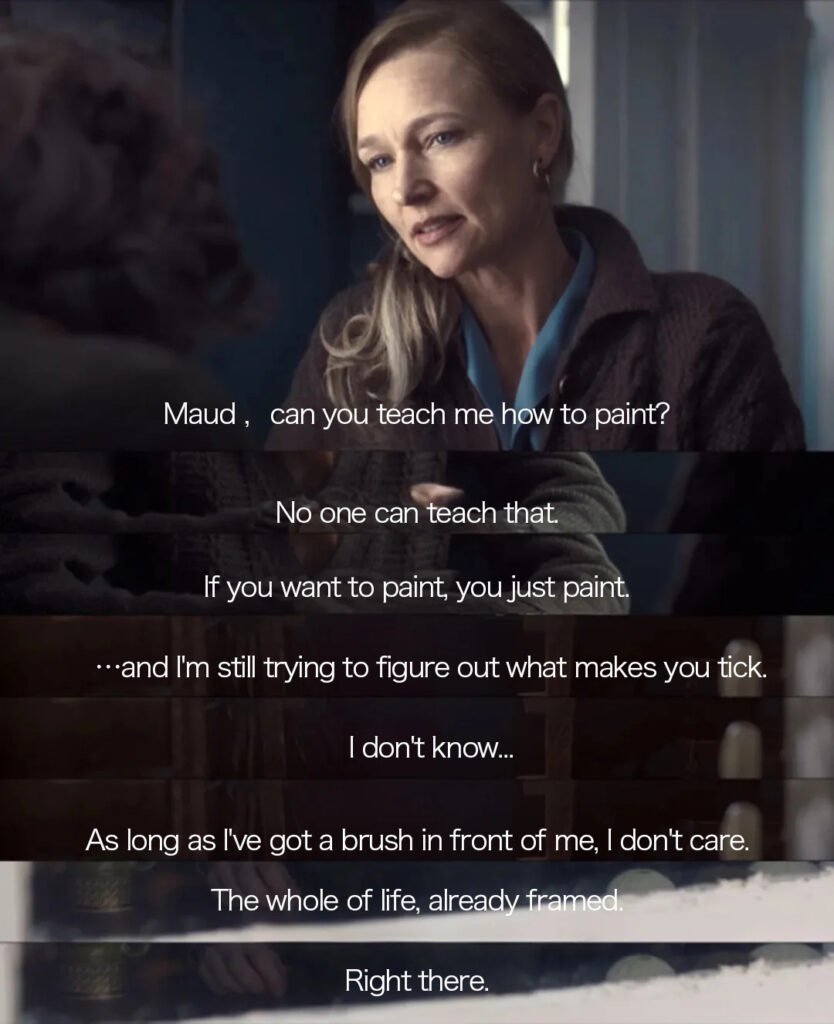
A still from the film Maudie.
( Explore Maud Lewis’s life story in this wonderful CBC documentary ,[available here])
Regrettably, when inspiration is organized by reason and laid out in neat, orderly steps, it loses its original light. I try not to define the source of my inspiration or set a fixed path for my process, because true expression should never be contained. And yet, as I turn these thoughts into words, I find myself trapped by them.
Language is meant to liberate thought, but here it has become my cage.
Creation is never a straight line. It is a process of constant departure and return, of breaking yourself down and building yourself back up again. Only in this cycle does a work truly come alive.
Perhaps years from now, I’ll look back at this article and smile at my own naïveté and clumsiness. I’ll think my ideas were not yet mature, my expression not yet precise. But without this “immaturity,” how could I ever arrive at the “future me”?
So I am not afraid of the limitations of my words right now, nor of their inadequacy. As long as I am willing to keep observing, keep feeling, and keep expressing, I am still on my way.